
For Executors
If your lawyer uses Flow Estate, you work alongside them on one shared estate record. You give them the estate's details once, upload documents, and can see where things are up to without having to ring and ask.
What you do in Flow Estate
- 1
Your lawyer invites you
When the law firm handling the estate uses Flow Estate, your lawyer adds you to the estate and you get an email invite. You choose your own password. If you are already on Flow Estate for another estate, the new estate is added to your account.
- 2
Fill in the intake form
Your lawyer sends you one form for what you know about the estate: property, bank accounts, insurance, shares and KiwiSaver, vehicles, firearms, digital assets and debts, and the IRD details. Save a draft and come back to it, then submit. Your lawyer checks each item before it goes into the estate.
- 3
Upload documents
Upload the will, the death certificate and other papers your lawyer asks for, and see which required documents are still missing.
- 4
Keep up with tasks and dates
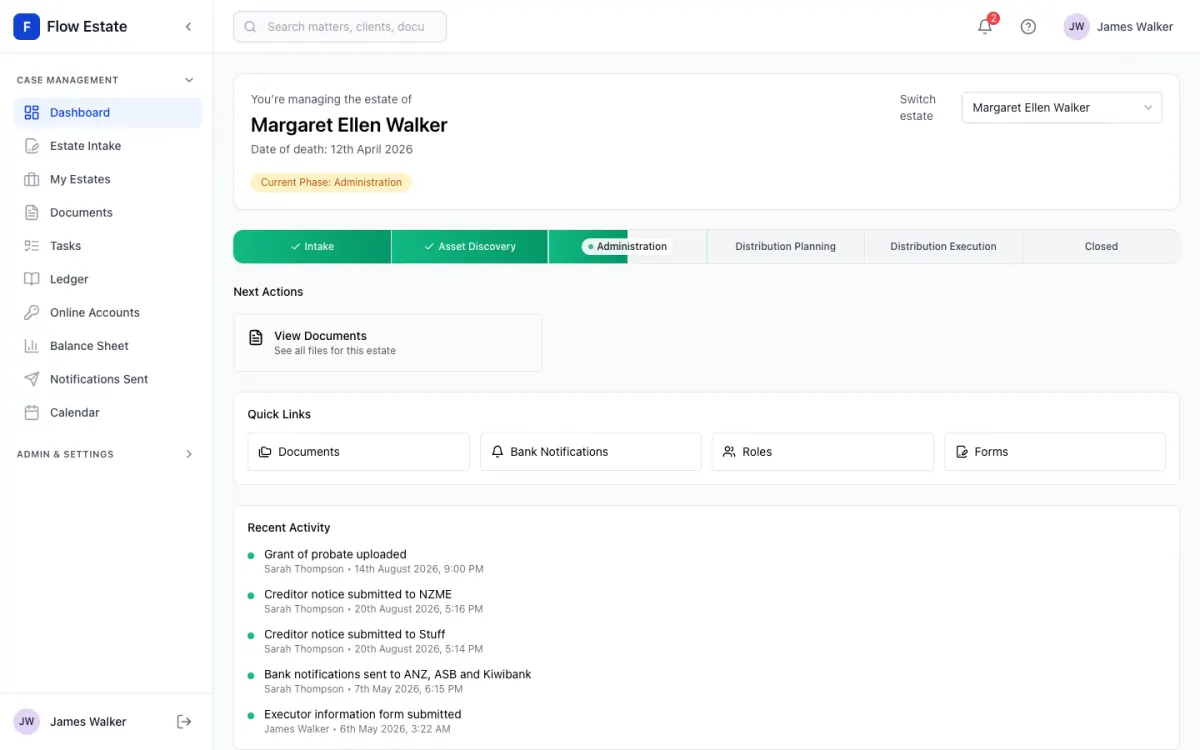
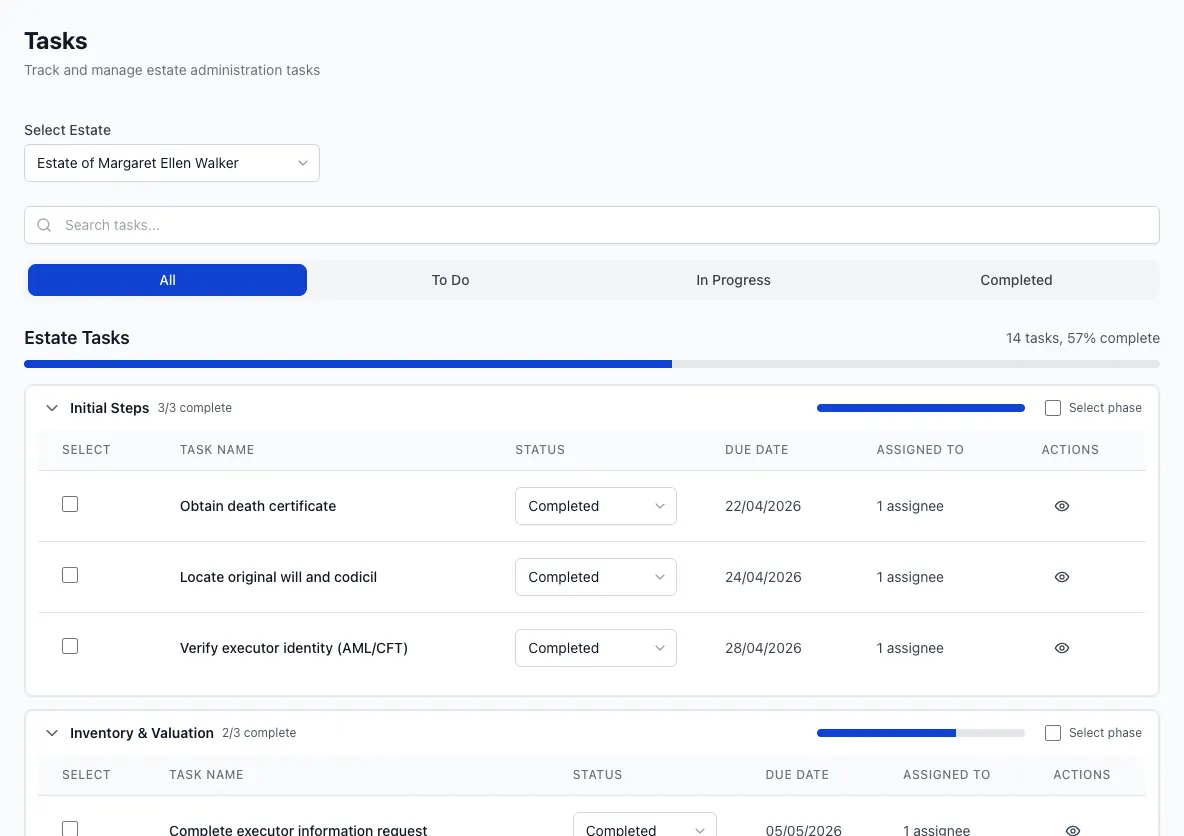
See the estate’s tasks and mark the ones assigned to you as in progress or completed. See the estate plan and the statutory deadlines that apply, and get a morning email on days when tasks are due or overdue.
Also on your dashboard
- Your executor dashboard: where the estate is up to, what to do next, and recent activity.
- The estate’s ledger and balance sheet, with PDF and CSV exports.
- The asset discovery checklist: draft letters to organisations and record what you find.
- The notifications sent to banks about the death, with the date and organisation.
- Notifications in the app and by email when the estate moves to a new stage or the creditor notice is published.
- One login across estates, with the right access on each, and a Help Centre with a guide for each screen.
What your lawyer does
Your lawyer creates the estate, keeps the asset register, prepares the High Court probate forms, publishes the notice to creditors, notifies the banks, and moves the estate through its stages. They decide what beneficiaries can see.
Flow Estate is software, not legal advice. Your lawyer advises you on your duties as an executor and on the estate.
Not working with a lawyer who uses Flow Estate? Flow Estate is currently available through law firms. You can tell your lawyer about it, or contact us.